
בס”ד
Once upon a time, there was a man named Isaac.
Isaac lived in the Land of Israel. One year, there was very little rain. The fields were dry. There was not much food.
Isaac could have gone to Egypt to find food. But G-d told him:
“Stay here. I will be with you and bless you.”
Isaac listened to G-d.
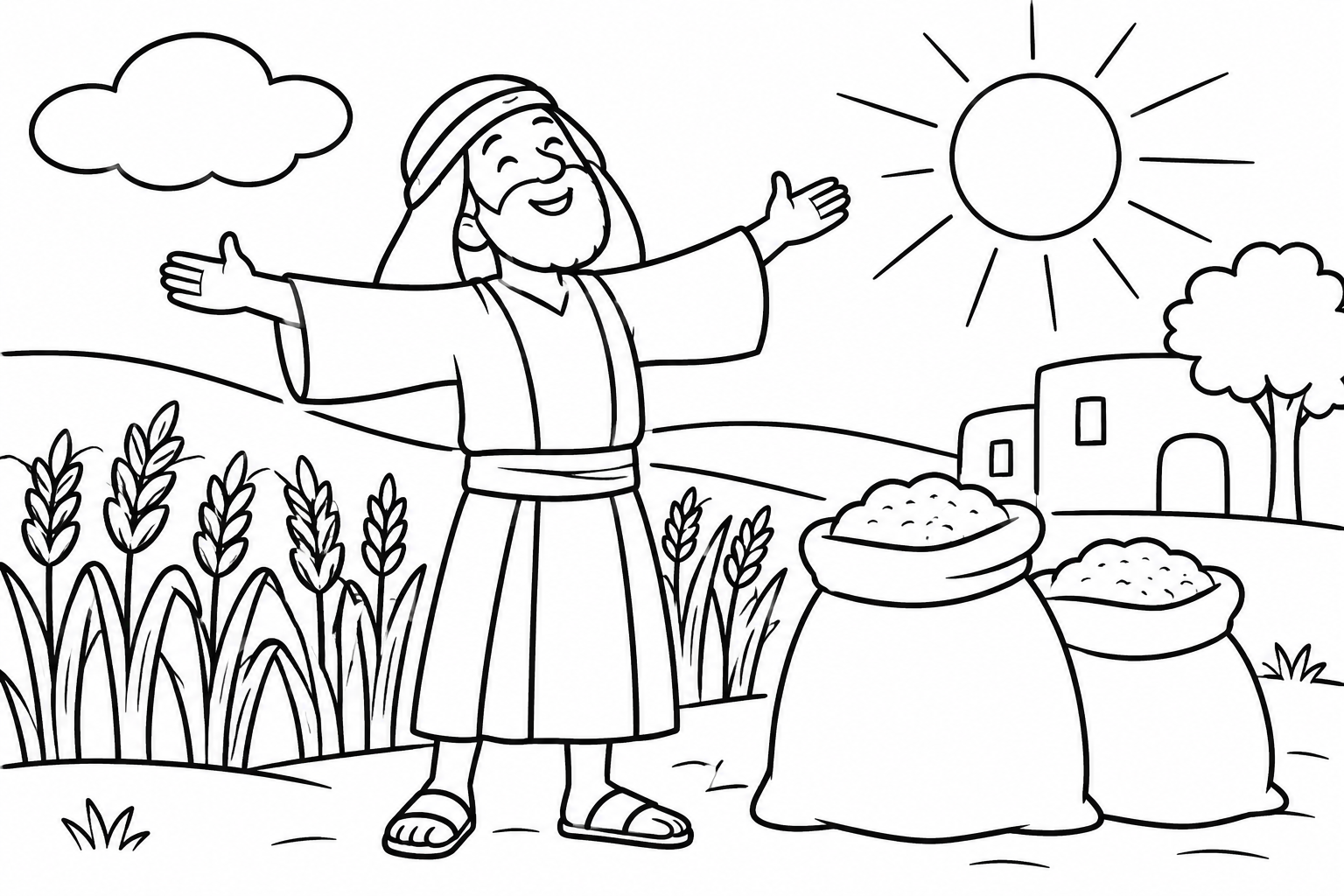
He planted seeds in the dry ground. He worked hard and took good care of his fields.
And then something wonderful happened!
When harvest time came, Isaac had a huge amount of grain. He had one hundred times more than people expected!
How did this happen?
The Torah teaches us that Isaac wanted to give a part of his harvest to G-d. He wanted to share what he had.
And G-d blessed him with even more.
The Sages teach us: “Give a little, and you will become rich.”
This does not mean that we should give only because we want to get more. We give because it is good to help others.
What can we learn from Isaac?
Imagine you have ten cookies. You could keep them all for yourself. But what if a friend comes to visit?
You could share two cookies with your friend. You would still have eight cookies, and your friend would be happy too!
Or imagine you have some toys you no longer play with. You could give them to a child who has very few toys.
When we share what we have, we make the world a kinder place.
The Lesson
G-d wants us to be kind and generous. When we share what we have and help others, we bring more goodness into the world. Giving does not make our hearts smaller. It makes them bigger!
By Rabbi Moshe Bernstein and Angelique Sijbolts
Sources & References
- Isaac in the Land of Israel & Famine: Genesis 26:1–3.
- The Sowing and the Hundredfold Yield: Genesis 26:12.
- Abraham’s Legacy of Charity and Justice: Genesis 18:19.
- The Promise of Divine Abundance Through Giving: Malachi 3:10 (“Bring the whole tithe into the storehouse… and test Me now in this… if I will not open for you the windows of heaven”).
- Rashi on Genesis 26:12: Details the two interpretations of Me’ah She’arim (estimation of natural yield vs. estimation for tithing).
- Maimonides (Rambam), Mishneh Torah, Laws of Kings and Wars (Hilchot Melachim u’Milchamot), Ch. 10, Law 10: Establishes that non-Jews who wish to perform acts of charity, kindness, and tithing receive reward from Heaven.
- The Lubavitcher Rebbe, Core source: Likutei Sichot, Vol. 5, Parshat Toldot, pp. 68–74: The primary Chassidic discourse analyzing the dual nature of Isaac’s harvest—combining natural effort with supernatural Divine abundance.
If you want more questions for contemplation, SEE THE OTHER BLOGS FROM RABBI MOSHE BERNSTEIN
© Copyright, all rights reserved. If you enjoyed this article, we encourage you to distribute it further.
Our blogs may contain text/quotes/references/links that include copyright material of Mechon-Mamre.org, Aish.com, Sefaria.org, Chabad.org, and/or AskNoah.org, which we use in accordance with their policies.