
בס "ד
Vor langer Zeit gebot Gott den Menschen, keine Götzen anzubeten.
Ein Götze ist etwas, zu dem die Menschen beten anstatt zu Gott.
Gd ist das einzig wahre Gd.
Nur er hat die ganze Welt erschaffen.
Er hat den Himmel erschaffen.
Er hat die Bäume erschaffen.
Er hat die Tiere erschaffen.
Er hat dich und mich erschaffen.
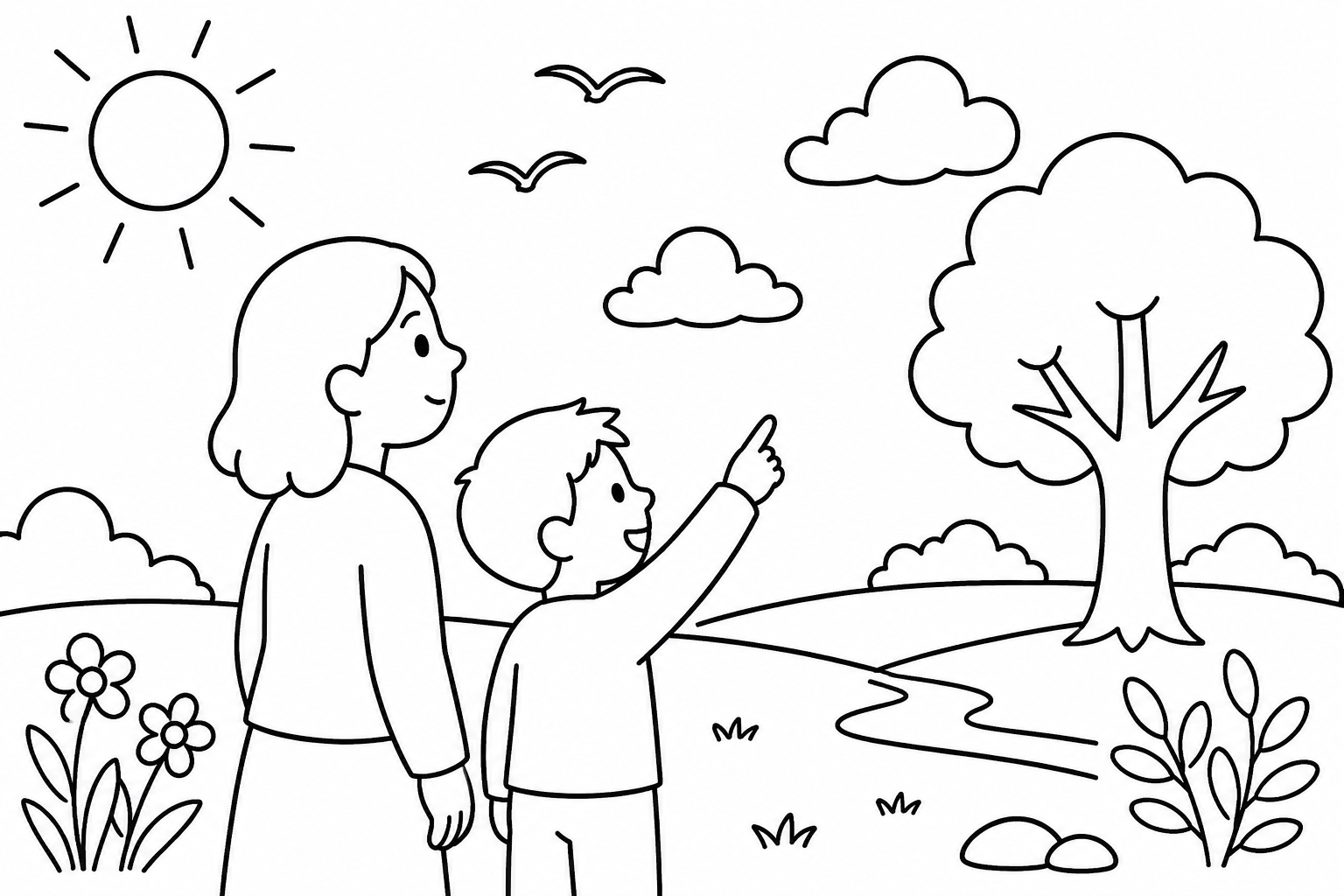
Eines Tages waren Levi und seine Mutter spazieren.
Sie sahen eine große, alte Statue.
Levi fragte: “Beten die Leute zu dieser Statue?”
Seine Mutter sagte: “Manche Leute tun das.”
Levi betrachtete die Statue.
“Es kann nicht sehen”, sagte er.
“Es kann nicht hören.”
“Es kann niemandem helfen.”
Seine Mutter lächelte.
“Das stimmt”, sagte sie.
“Wir beten nur zu Gott.”
“Gott hört jedes Gebet.”
“Gott lebt.”
“Gott ist immer bei uns.”
Levi war glücklich.
Er wusste, dass es nur einen Gott gibt.
Er wollte ihn jeden Tag lieben und ihm gehorchen.
Eine Lehre daraus ist: Es gibt nur einen wahren Gott, und nur er ist unserer Gebete würdig.
Von Rabbi Moshe Bernstein und Angelique Sijbolts
Quellen:
Deuteronomium 12,3. Rambam, Gesetze des Götzendienstes, Kapitel 1. Der göttliche Kodex von Rabbi Moshe Weiner, Teil 2, Verbot des Götzendienstes 1-2. Likutei Sichot, Band 9, S. 94. Sanhedrin 63b. Siehe Likutei Sichot, Teil 27, Seite 246, wo geschrieben steht: “Und die ganze Welt soll sich nur damit beschäftigen, Gott zu erkennen, was einfach alle Völker der Welt einschließt… ‘die ganze Welt’ bedeutet auch die Noachiden.”
Wenn Sie weitere Fragen zum Nachdenken haben möchten, SIEHE DIE ANDEREN BLOGS VON RABBI MOSHE BERNSTEIN
© Copyright, alle Rechte vorbehalten. Wenn Ihnen dieser Artikel gefallen hat, ermutigen wir Sie, ihn weiter zu verbreiten.
Unsere Blogs können Texte/Zitate/Referenzen/Links enthalten, die urheberrechtlich geschütztes Material von Mechon-Mamre.org, Aish.com, Sefaria.org, Chabad.orgund/oder FragNoah.orgdie wir in Übereinstimmung mit ihren Richtlinien verwenden.