
בס "ד
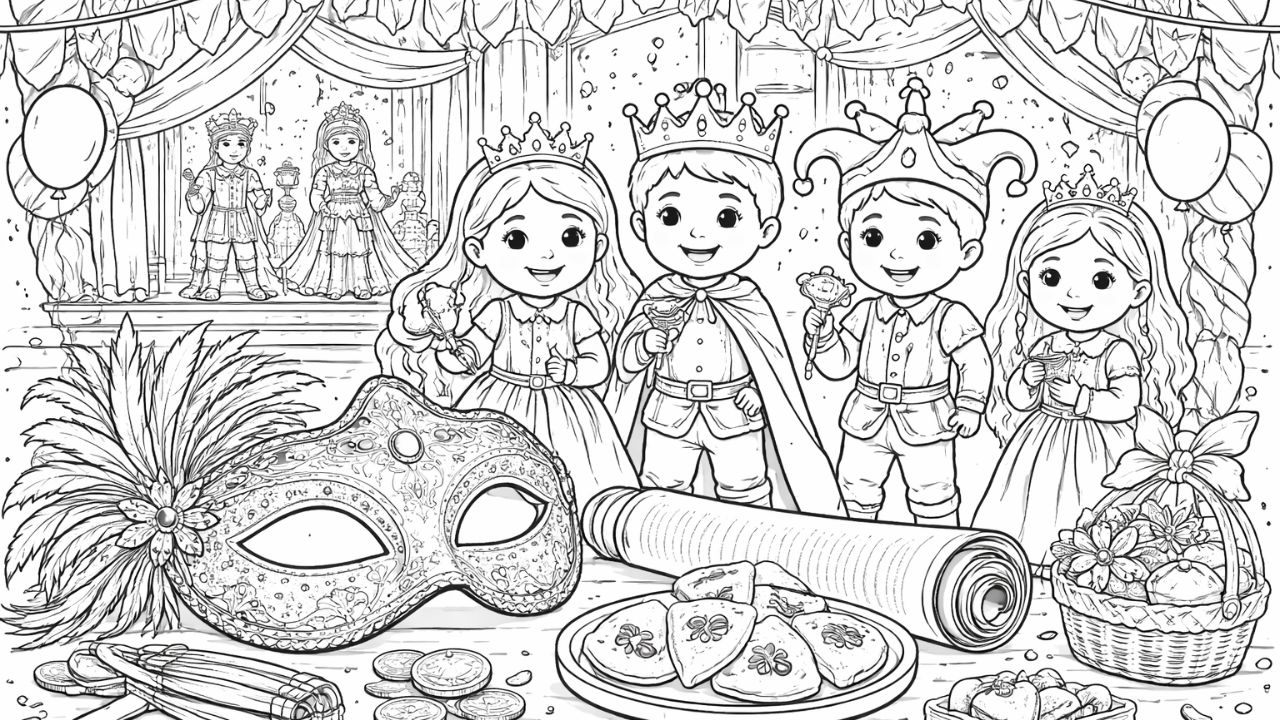
Pour Pourim, nous lisons la Meguila. Cette histoire se déroule il y a très longtemps, au pays de Perse. Il y avait un roi nommé Assuérus. Il aimait les grandes fêtes. Un jour, il organisa un festin somptueux avec une abondance de mets et de boissons. Tout était magnifique.
Cela semblait être une fête formidable.
Mais quelque chose a mal tourné.
Le roi Assuérus avait trop bu. Il avait perdu la raison. Voulant montrer son importance, il fit venir la reine Vashti pour attirer tous les regards. Ce fut un acte cruel. On ne traite pas une personne de cette façon.
Cela nous apprend quelque chose d'important.
Si quelqu'un ne fait que ce qu'il veut sans se soucier des autres, les choses tournent mal. On oublie alors que chaque personne est unique.
Dieu a créé chaque personne importante. Personne ne devrait être traité comme un objet ou un jouet.
Les Sages nous enseignent que manger et boire ne sont pas mauvais en soi. Célébrer est une bonne chose ! Mais il faut le faire avec modération. Il convient d'être réfléchi, bienveillant et respectueux envers autrui.
À l'occasion de Pourim, les gens portent des masques et des costumes. Le masque symbolise le fait qu'on ne voit pas toujours la réalité en face. Une chose peut paraître belle à l'extérieur sans être bonne à l'intérieur.
Pourim nous enseigne aussi :
- Nous pouvons être heureux.
- Nous pouvons fêter ça.
- Mais nous devons toujours essayer de faire ce qui est juste.
Dieu a également donné des règles à tous les peuples du monde, et pas seulement au peuple juif. Ce sont les Sept Lois noachiques. Elles enseignent aux hommes de ne pas voler, de ne pas faire de mal à autrui, d'être justes et d'établir des règles qui contribuent à un monde meilleur et plus sûr.
Lorsque les gens respectent ces règles, le monde devient un endroit meilleur et plus sûr.
Ce n'est pas le plus bruyant ou le plus fort qui remporte la victoire.
Le véritable gagnant est celui qui continue de choisir ce qui est juste.
Voilà ce qui se cache derrière le masque.
Par le rabbin Moshe Bernstein et Angelique Sijbolts
Source : Traité Megillah 12b. Torah Or Tetzaveh 83:4.
Si vous voulez d'autres questions à méditer, VOIR LES AUTRES BLOGS DU RABBIN MOSHE BERNSTEIN
© Copyright, tous droits réservés. Si vous avez apprécié cet article, nous vous encourageons à le diffuser.
Nos blogs peuvent contenir du texte, des citations, des références ou des liens qui comprennent des éléments protégés par le droit d'auteur de Mechon-Mamre.org, Aish.com, Sefaria.org, Chabad.orget/ou AskNoah.orgque nous utilisons conformément à leurs politiques.