
בס”ד
Sam was six years old.
One day, his mother told him about Yom Kippur.
“Yom Kippur is a special day,” she said.
“It is a day to think about what we did.”
Sam asked, “What if I did something wrong?”
“Then you can say sorry,” Mom said.
“You can try to fix it.”
“And you can try to do better next time.”
“This is called 테슈바. It means coming back to G-d and choosing to do what is right.”
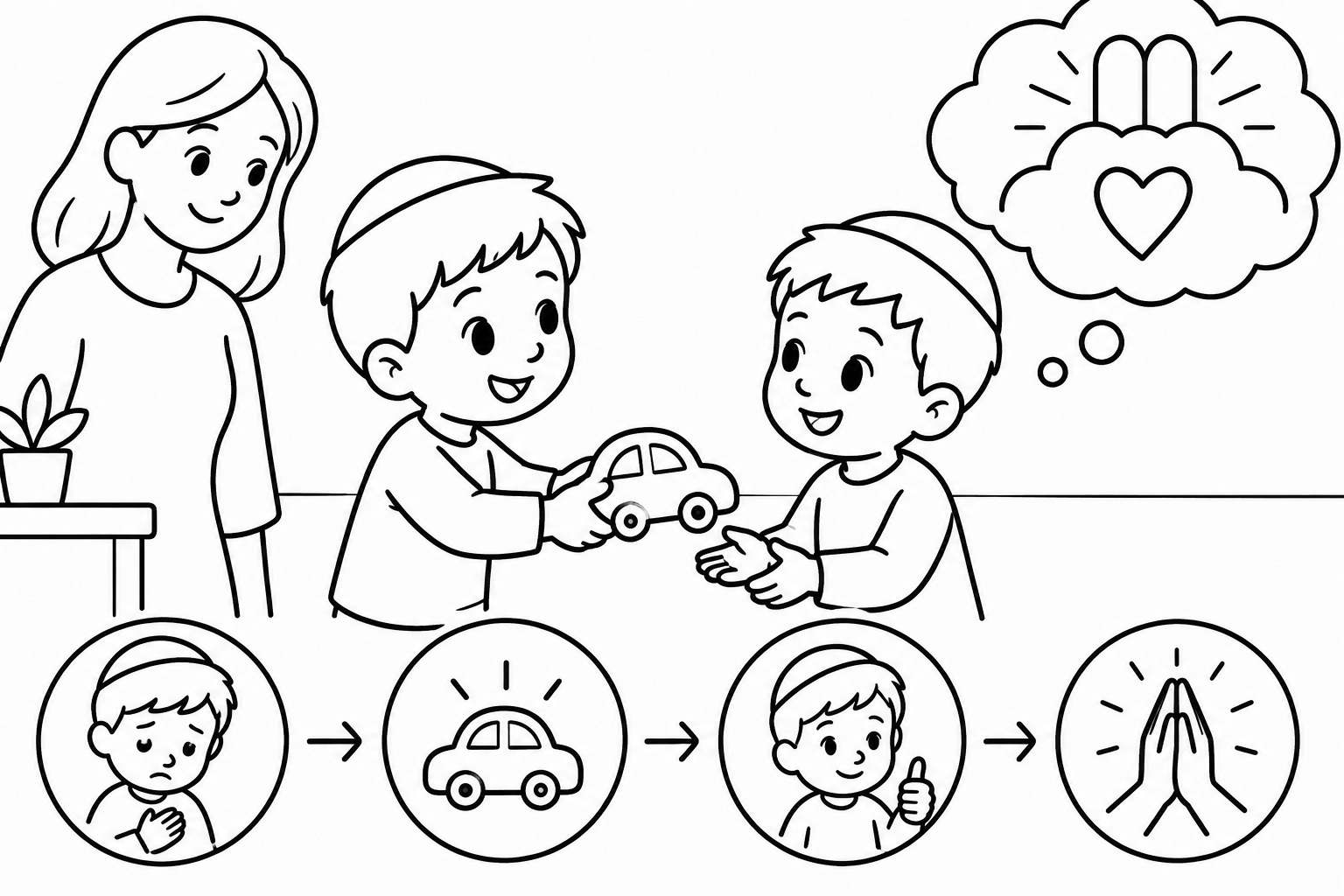
That day, Sam took his friend’s toy without asking.
His friend was sad.
Sam thought about what he had done.
“I am sorry,” he said.
He gave the toy back.
“Next time, I will ask first.”
Sam felt happy.
He had learned something important.
G-d wants us to do good.
We can pray to Him.
우리는 솔직해질 수 있어요.
우리는 다른 사람들을 도울 수 있습니다.
And when we make a mistake, we can always try again.
수업:
Teshuvah means:
Say sorry.
Make it right.
Try to do better.
Come closer to G-d.
랍비 모셰 번스타인과 앙젤리크 시볼츠 지음
출처:
The Book of Jonah: A clear biblical example of the repentance of the people of Nineveh (who were Noahides) and the Creator’s willing acceptance of their repentance.
Maimonides, Laws of Repentance 3:4: The universal dimension of Rosh Hashanah and the Ten Days of Repentance, in which the deeds of the inhabitants of the world are considered and the world is viewed as standing in a balance between merit and guilt.
Isaiah 55:6: “Seek the L-rd when He may be found, call upon Him when He is near”—which our Sages explain refers to the ten days between Rosh Hashanah and Yom Kippur.
Tanya, Iggeret HaTeshuvah, Chapter 2: Explanation of the inner essence of repentance that reconnects the soul to its root.
더 생각해 볼 만한 질문을 원하시면, 모세 번스타인 랍비의 다른 블로그도 확인해 보세요.
© 저작권, 모든 권리 보유. 이 글이 마음에 드셨다면, 다른 사람들과 공유해 주시면 감사하겠습니다.
저희 블로그에는 저작권이 있는 자료를 포함하는 텍스트/인용문/참고 자료/링크가 포함될 수 있습니다. 메콘-맘레.org, 아이쉬닷컴, 세파리아닷컴, 차바드닷컴, 그리고/또는 AskNoah.org, 저희는 해당 업체들의 정책에 따라 이를 사용합니다.
 Korean
  English
  Dutch
Dutch  French
  Spanish
  Italian
  German
  Hebrew